For the past two years, the cultural discourse surrounding artificial intelligence in music has been trapped between two loud extremes. On one side stands breathless Silicon Valley evangelism, claiming that anyone can become an overnight pop star in ten seconds flat. On the other side sits a cynical chorus of legacy gatekeepers dismissing all synthetic audio as disposable, algorithmic sludge.
Both narratives miss the quiet revolution taking place in home studios across the world.
When we dispatched our five-question studio craft questionnaire to active artists on The Open Stage, we were looking for the ground truth of modern generative music production. What we received back from Eva Lunella and Angelo Licalzi (SIMOCENTRICO) was an unfiltered testament to patience, creative independence, and the resolution of long-standing creative grief.
Neither artist discovered AI looking for a get-rich-quick hack. Both were storytellers who had spent years: and in one case, decades: with complete sonic universes locked inside their minds.
§01 The fifteen-year wait and the story deferred
Fifteen years ago, Spanish novelist and lyricist Eva Lunella wrote an entire album. She had the words, the aesthetic architecture, and a distinct emotional perspective. But in the traditional recording industry, a lyricist without extensive instrumental proficiency or deep capital is entirely at the mercy of session musicians, arrangers, and expensive studio time.
"I had a very clear artistic vision," Eva explains, "but I was entirely dependent on other people to develop the musical side of the project. For various reasons, that project never came together the way I had envisioned, and the disappointment stayed with me for years."
The turning point arrived when Eva began looking for ways to add an auditory layer to her novels. AI did not invent her desire to compose; it eliminated the fifteen-year financial and logistical bottleneck between her literary prose and the speaker cone.
A similar arc unfolded for Angelo Licalzi in Siracusa, Sicily. Angelo took guitar lessons years ago and shared an original composition with his instructor, who loved it and suggested producing it. But between full-time work, studio rates, and daily life, the vision remained permanently parked under "someday."
"It actually started as a game," Angelo reflects on his first sessions. "The first song I created came from something I had been carrying around in my head for years: a story I had always wanted to turn into music but had never really managed to. When I heard the result, I started recognizing myself in it. The emotions, the atmosphere, even the kind of music I had always loved. AI did not give me the desire to make music. That desire was already there. It simply gave me a way to finally act on it."
§02 The human division of labor: beyond the single click
The central lie of modern "AI music" skepticism is that tracks emerge fully formed from a single clever prompt.
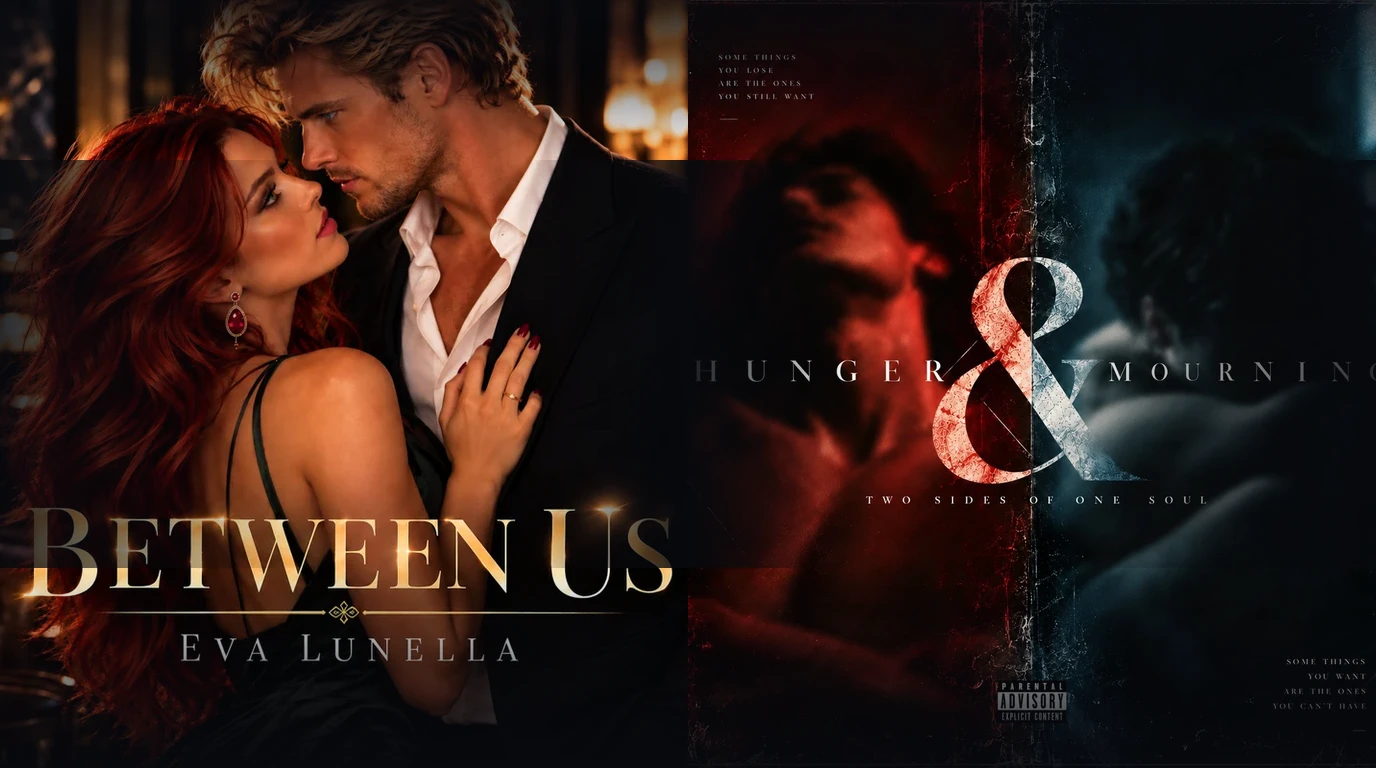
If you speak with Eva Lunella about her seven-track English narrative project "Between Us" or her cinematic Spanish singles ("Pulso Roto", "Recuerdo en Llamas"), you realize the process mirrors classical arrangement far more than prompt engineering:
For Angelo, whose twenty-track debut double album "HUNGER & MOURNING" traverses alternative synth-pop, electropop, and dark, sensual minimalism, the workflow is almost punishing in its attention to detail. Angelo uses ChatGPT as a creative sounding board for lyric structures, feeds recordings of his own voice into Suno to guide melodic contours, and generates dozens upon dozens of variations to lock down a single verse.
"It is definitely not a matter of typing a prompt and accepting whatever comes out," Angelo notes. "I can spend hours working on a single song, generating dozens and dozens of versions. Sometimes I change one line. Sometimes I completely rethink the arrangement. And I have a very simple test: when I find myself playing a song on repeat, even after listening to it countless times, I know I am probably getting somewhere. AI can give me endless possibilities. But deciding which ones mean something to me is still my responsibility."
§03 Breaking the economic studio wall
What makes generative tools revolutionary is not that they replace musicianship, but that they demolish the economic barrier to sonic experimentation.
In a traditional commercial facility, exploring multiple genre avenues for a conceptual project is financially prohibitive. A twenty-track double album like HUNGER & MOURNING: spanning intimate acoustic minimalism, heavy sub-bass drive, and layered vocal harmonies: would easily require tens of thousands of euros in tracking, arranging, and session fees.
"I can move from melancholic electronic pop to something darker, more aggressive, sensual, minimal, or experimental," Angelo says. "I can try complex vocal arrangements, unusual production ideas, and entirely different sonic worlds without having to organize a traditional studio production every time. I do not have to choose between what I want to imagine and what I can afford to experiment with. AI has not just brought an old dream closer. It has made that dream much bigger than I originally imagined."
For Eva, this liberation has meant the ability to realize complex, bilingual, multi-voice narrative concepts without diluting her artistic vision through third-party compromise. Her work on Between Us explores a continuous emotional dialogue between two people through recurring male/female vocal interplay, while her Spanish releases delve into memory and destiny with pure synth-pop clarity.
§04 "It didn't live those experiences for me"
When asked about the distinction between synthetic "slop" and expressive art, neither artist resorts to technical jargon. Both ground their answers in lived emotional truth.
Angelo displays a humility rarely seen in either the tech world or the indie music scene:
"I do not necessarily like calling myself an artist," Angelo adds. "I prefer to think of myself as someone with an active mind, a lot of imagination, and a strong need to express things. I have enormous respect for people who have spent years studying music, learning instruments, singing, and developing their production skills. I am not going to pretend I have followed the same path simply because I can now release an album using AI tools. What matters is how you use the tool and what you are trying to communicate."
Eva frames the boundary with equal sharpness:
"The difference lies in having a clear understanding of what I want to communicate and carefully working on every element until the song truly connects with what I want to express. It is the very opposite of simply clicking a button. It involves a continuous process of exploration and creative decision-making at every stage."
This is the line that separates the disposable prompt-jockeys from sovereign songwriters. A neural network can compute harmonic probability and synthesize frequency envelopes, but it has no grief to mourn, no novel to accompany, no childhood memories of Siracusa, and no heartbreak to resolve. The emotion is human; the machine is merely the pencil.
§05 The next three years: coexistence over conflict
Looking ahead, both artists envision a landscape where the novelty of AI wears off and the tool takes its rightful place alongside synthesizers, drum machines, and multi-track DAWs.
Eva predicts that generative tools will break the stranglehold of formulaic commercial pop:
"Within three years, artificial intelligence will become an indispensable tool in music production," she writes. "It will help raise the current standard of musical quality by opening doors to people with great creativity and artistic sensitivity who, until now, have lacked the resources or technical knowledge needed to bring their ideas to life. Music creation will become less constrained by the commercial formulas of the industry, allowing different, more personal, and more sophisticated artistic proposals to emerge."
Angelo sees AI acting as a bridge rather than a wedge:
"I really hope that making these tools more accessible does not mean losing respect for the people who dedicate their lives to studying, performing, and producing music. I do not think one needs to replace the other. They can coexist. What excites me most is the possibility that AI could help people with great ideas and undiscovered creative potential finally get heard: becoming a bridge between those people and professional musicians and producers who can recognize their potential and develop it further."
§06 The sovereign catalog: stream the releases
Both Eva Lunella and SIMOCENTRICO are signed to The Open Stage on BitwareTunes, where independent AI artists retain 100% of their copyrights, master rights, and publishing with zero algorithmic throttling or middleman cuts.
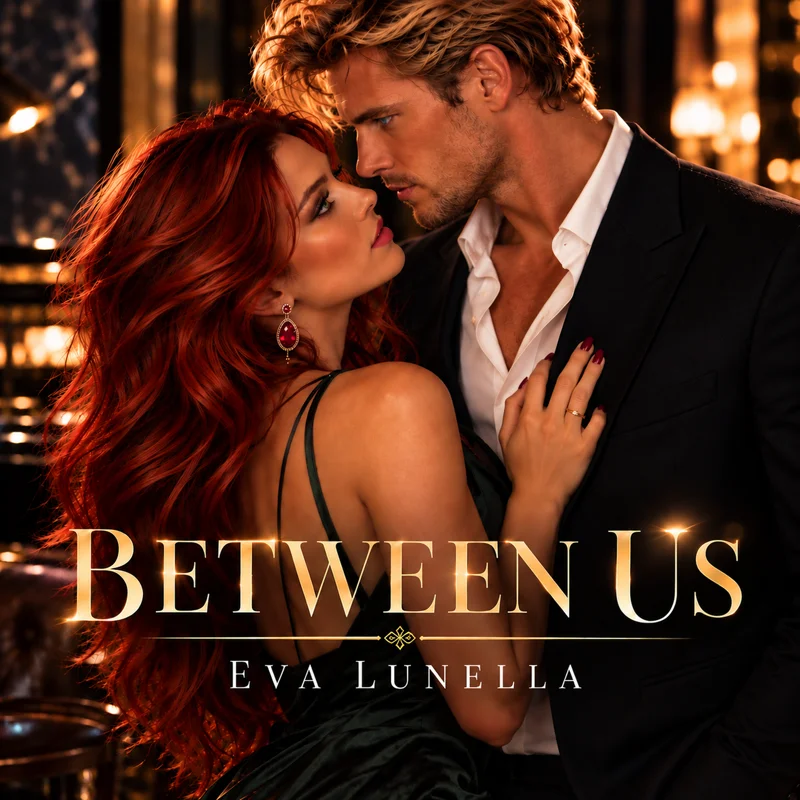
Eva Lunella
Spanish author, novelist, and songwriter exploring passion, intimacy, and narrative tension through rich electronic pop and cinematic synth soundscapes.
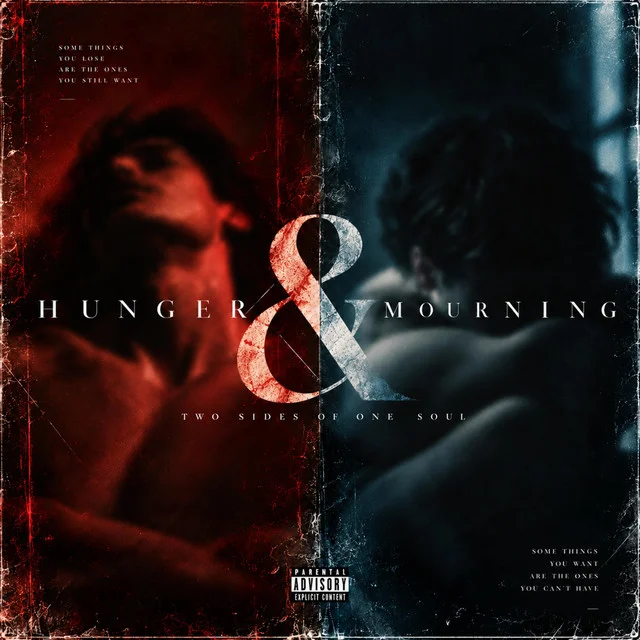
SIMOCENTRICO
Songwriting project of Angelo Licalzi from Siracusa. A 20-track debut double album exploring loss, grief, desire, and reconnection through dark electropop.
The machine can calculate chord progressions in milliseconds. Only a human being can carry a story for fifteen years and decide which notes hurt the most.