
For the past two years, the cultural discourse surrounding artificial intelligence in music has been trapped between two equally loud, equally shallow caricatures.
On one side stands the breathless Silicon Valley pitch: type three adjectives into a prompt box, wait fifteen seconds, and watch an algorithm spit out an effortless global chart-topper. On the other side sits a defensive legacy establishment that summarily dismisses every single track touched by neural processing as “soulless slop,” assuming that anyone using modern audio models is an opportunistic amateur who never learned to play an instrument, craft a melody, or write a lyric.
Both sides miss the real story.
The genuine revolution isn’t happening in the boardrooms of venture capital firms or in the spam farms of anonymous playlist hijackers. It is happening in home studios and writing rooms run by working, experienced musicians who have spent years paying dues.
When Brian Myk submitted his project Rocket Horse to BitwareTunes’ Open Stage, our editorial desk immediately sat up. Based in Jasper, Georgia, Myk is not an internet prompter dabbling with novelty sounds. He is a BMI-affiliated songwriter with more than 60 songs written and recorded through traditional studio methods before generative production ever entered the picture. Over time, that catalog has expanded to roughly 170 released or release-ready songs, with additional material written beyond that.
Over the past year alone, Rocket Horse has crossed one million streams across platforms in less than twelve months, sustained periods of over 200,000 monthly streams, received radio airplay in more than sixty countries, and cultivated a combined social community exceeding 100,000 followers. Earlier in his career, his track “Revolution” earned a feature placement in the independent film How to Cook a Frog.
What makes Myk’s story essential is how he arrived at AI. He didn't turn to generative audio to bypass the hard work of songwriting—he turned to it because he had already done the writing, and he wanted fuller, richer productions that could bring the instruments and arrangements in his head to life.
In this in-depth studio spotlight, Brian Myk opens up about studio arrangements, explains why AI music is “CGI for the ear,” and makes an unvarnished case for why radical transparency and creative sovereignty are the only sustainable paths forward.
§01 The Studio Mileage & The Shift: Bringing the Inner Sound to Life
Every prolific songwriter knows the feeling of hearing a complex sonic landscape in their mind that exceeds the immediate resources in the room. You hear a driving horn section, a pedal steel glide, a vintage Hammond organ swell, or layered vocal textures that you can't easily capture with the musicians or schedules currently available to you.
“Rocket Horse didn’t start with AI,” Myk emphasizes. “I was writing songs and making records with studio musicians long before generative music became part of the conversation. ‘Revolution’ came out of that traditional side of the catalog and was used in the film How to Cook a Frog. That history matters to me because I know what goes into taking a song from the writing stage to a finished recording.”
The transition to generative audio was not a sudden philosophical conversion or a desire to replace human musicianship. It was born out of a desire for artistic expansion:
“What attracted me to these new tools was a practical problem: I had written more music than I could realistically get into the studio and finish through the traditional process,” Myk explains. “Musicians, scheduling, and studio production take time and money. I still value all of that, but I wanted to hear more of the songs realized. There wasn’t one dramatic, overnight conversion. The turning point was understanding that I could explore arrangements and production directions for songs I’d already written without treating every experiment as a full studio project. That’s when I started looking at generative audio as another production instrument. A tool can help me hear a song in a new way; it doesn't replace the reason I wrote the song in the first place.”

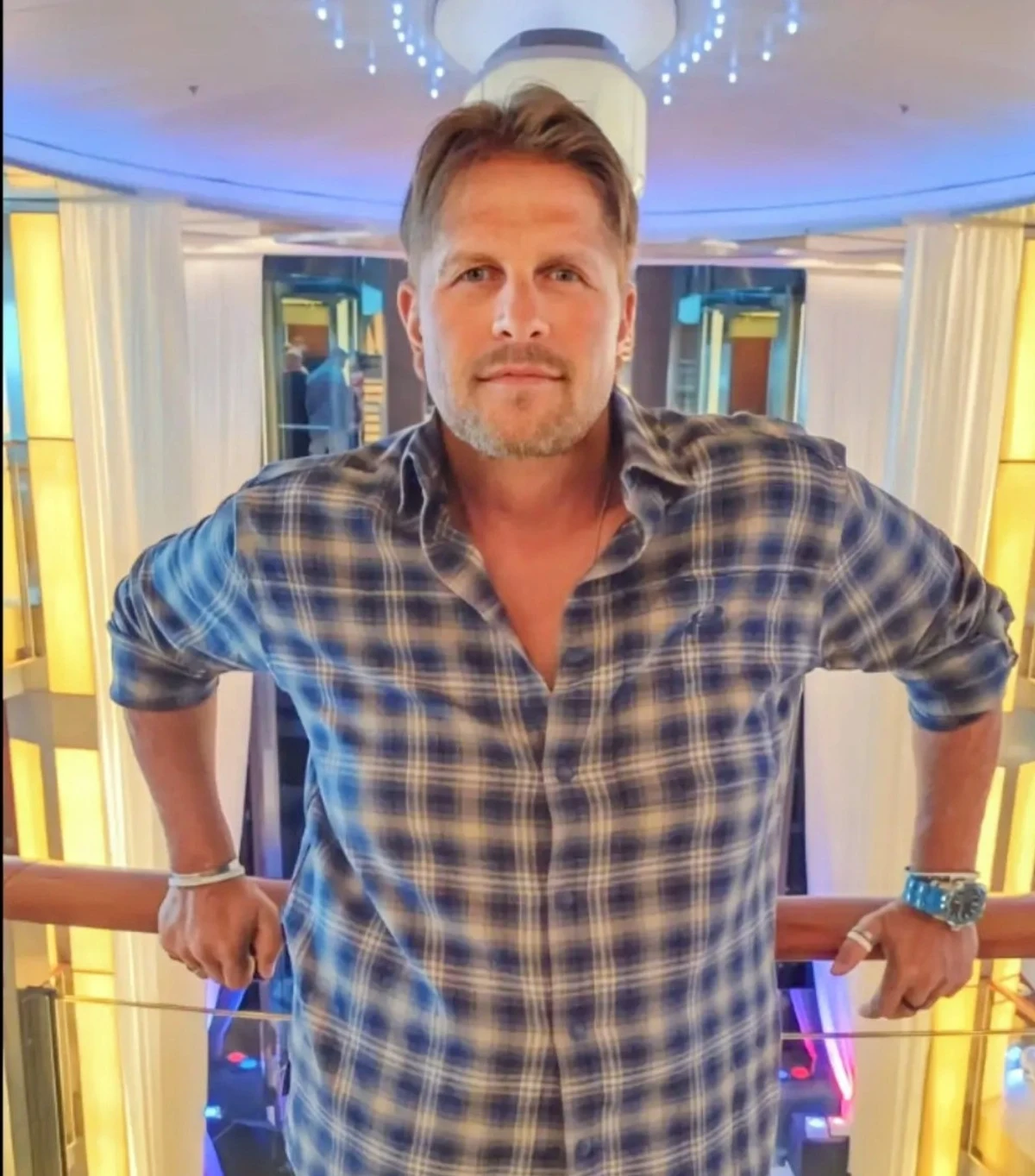
§02 The Songwriter’s Fingerprint: The House and the Foundation
One of the defining hallmarks of Rocket Horse is stylistic versatility. In an era where streaming algorithms reward acts for churning out the exact same tempo and mood over and over, Myk operates like a classic song-craft chameleon.
His catalog moves from the modern guitar energy of “Rockstar” to the anthemic country-rock of “Good Girls Party”, shifting into the funky crossover groove of “Circus”, and extending into country-rock storytelling like “Shotgun Wedding” and melodic midtempo ballads like “Maybe Me and the Moon”.
When an artist explores different vocal textures, genres, and arrangements across tracks, where does the human creator reside? How does the listener recognize the person behind the songs?
“At the end of the day, the songwriter is still the songwriter,” Myk reflects. “We write from our experiences and who we are. You can listen to our traditional recordings or newer AI-assisted work and still hear traces of the same writer. It’s like building a house: with a strong foundation, you can make all kinds of cool things happen. A background in songwriting gives you that foundation.”
Myk is clear about where his craft steers the ship:
“My part is the underlying songwriting: the idea, lyrics, melodic and hook direction, song structure, and the creative decisions about what a track is supposed to communicate. With AI-assisted productions, the tools can contribute performances, voices, and sonic treatments, but I still have to decide what fits the song and what doesn’t.
I wouldn’t claim that somebody can identify me from a virtual singer’s voice alone. The connection is in the writing: the attitude, storytelling, phrasing, choruses, and the way I try to make a song stick with somebody. The sound can change; my approach to the song carries through.”
§03 The “CGI for the Ear” Analogy: Emotion, Authenticity, and Respect
Perhaps the sharpest conceptual insight Myk brings to the cultural debate is his comparison between generative audio and movie CGI.
When moviegoers watch Jurassic Park or watch superheroes soar across a theater screen, nobody believes an actual dinosaur was captured on film or that someone is defying gravity. Yet audiences still feel their pulses quicken, shed tears during intimate character moments, and remember the story years later. The technology is simply the vehicle that delivers the human imagination.
Crucially, Myk pairs this insight with deep, genuine respect for the studio musicians he has worked with across his career.
“I understand why people worry about AI music, especially musicians whose work and livelihoods deserve respect,” he emphasizes. “I’ve worked with real players, and I’m not interested in erasing the importance of what they do. My older recordings stand on their own as traditional productions, and I don’t pretend a newer AI-assisted recording was made the same way.
But I also think it is too easy to hear the word ‘AI’ and stop listening. An uninteresting song doesn’t suddenly become great because a human band recorded it, and a song with a real story doesn’t automatically lose all meaning because modern software helped produce it. Judge the writing, the intention, and the result, and be honest about the tools along the way.”
§04 Unlocking the Catalog: Speed, Scope, and Critical Listening
The difference between a seasoned songwriter and a casual generative user lies in what happens before any button is pressed.
A casual user opens an empty prompt box with no song written, hoping the algorithm will supply an entire composition out of thin air. Myk, by contrast, entered the space with over 60 traditionally tracked songs and dozens of completed original compositions, lyrics, and melodies waiting in his notebooks.
“The biggest change has been turning possibilities into recordings,” Myk notes. “Rocket Horse has grown to roughly 170 released or release-ready songs, with more material written beyond that. Before these tools, every additional arrangement or recording direction could mean another long round of production.
Now I can test approaches more quickly: whether a song wants a rock arrangement, a country-rock feel, something more stripped down, or something completely different. That doesn’t mean every result is a keeper. I still have to listen critically, choose, revise, and sometimes walk away from a version that doesn’t serve the song.”
For an independent songwriter, time and reach matter:
“For an independent songwriter, speed matters because songs don’t do much for listeners sitting unheard in a notebook or on a hard drive. The opportunity is to let more of the catalog have a life. The goal isn’t to release everything just because I can; it’s to find the right home for each song.”
§05 Radical Transparency: Why Honesty Builds Lasting Careers
As modern production tools spread throughout the music industry, an uncomfortable silence has settled over mainstream pop. Myk believes that established artists are already using AI in quieter ways—checking lyrics or other creative work for missed details, exploring harmonic options, and testing refinements—even if their audiences don’t always see that process.
Yet while many creators hesitate to speak openly about modern tools for fear of industry pushback, Myk has chosen the opposite route. In interviews across North America and international publications like the UK's Rock The Joint Magazine, he has been completely upfront about his hybrid process.
His reasoning is grounded in artist-to-fan integrity:
“The songwriting and creative direction are mine. On the newer recordings, AI-assisted production is part of the process, and I think the listener, outlet, and potential business partner deserve to know that. On the older tracks, we worked with musicians in the traditional way. Those differences shouldn’t be blurred just to get somebody to press play.
If you’re building a career that you want to last, trust matters. I’d rather have an honest conversation—even with somebody who disagrees with my choices—than build an audience on a misleading story. My position is simple: be upfront, respect the people who make music, and let the songs be judged on their merits.”
At BitwareTunes, where transparent tool declarations are a prerequisite for every artist on the roster, Myk’s commitment to honesty aligns directly with the label's ethos.
§06 The Sovereign Era: The Songs Come First
Despite generating over a million streams across major streaming networks, Myk is well aware of the broken economics that burden independent songwriters. Pooled royalty models that pay fractions of a cent per stream and treat music as disposable algorithmic filler make it notoriously difficult for writers to build sustainable, independent operations on their own terms.
What drew Rocket Horse to BitwareTunes was a platform that approached him as a songwriter first:
“What interested me about BitwareTunes and The Open Stage was the willingness to listen to a songwriter-led project on its own terms,” Myk explains. “Your team didn’t treat Rocket Horse as just another anonymous AI prompt. You recognized that there is a history here: traditional recordings, collaborations, a film placement, a broad catalog, and an audience that existed before this production shift. You were also open to five individual singles and to telling the fuller story in an editorial feature. That means a lot to an independent artist.”
When discussing artistic independence, Myk's philosophy is clear:
“What appealed to me is that you’re opening a door at a time when other people seem to be trying to close one. I was a songwriter before AI, I’m a songwriter today, and I’ll still be a songwriter whatever technology comes along next. The songs come first. Everything else is how we get them heard.
To me, artistic sovereignty means being able to choose the songs, the production method, the credits, the release strategy, and the partners, while protecting the rights connected to the work. It means having more than one way to reach listeners and being able to tell the truth about the music. I’m interested in platforms that make room for that kind of independence, and I’m looking forward to seeing what we can build together.”
§07 The Rocket Horse Open Stage Spotlight
As Brian Myk finalizes his curated five-track Open Stage release—featuring human-authored songs and creative direction by Brian Myk, newer AI-assisted recordings, and LANDR editing tools—listeners can explore Rocket Horse across the digital ecosystem:
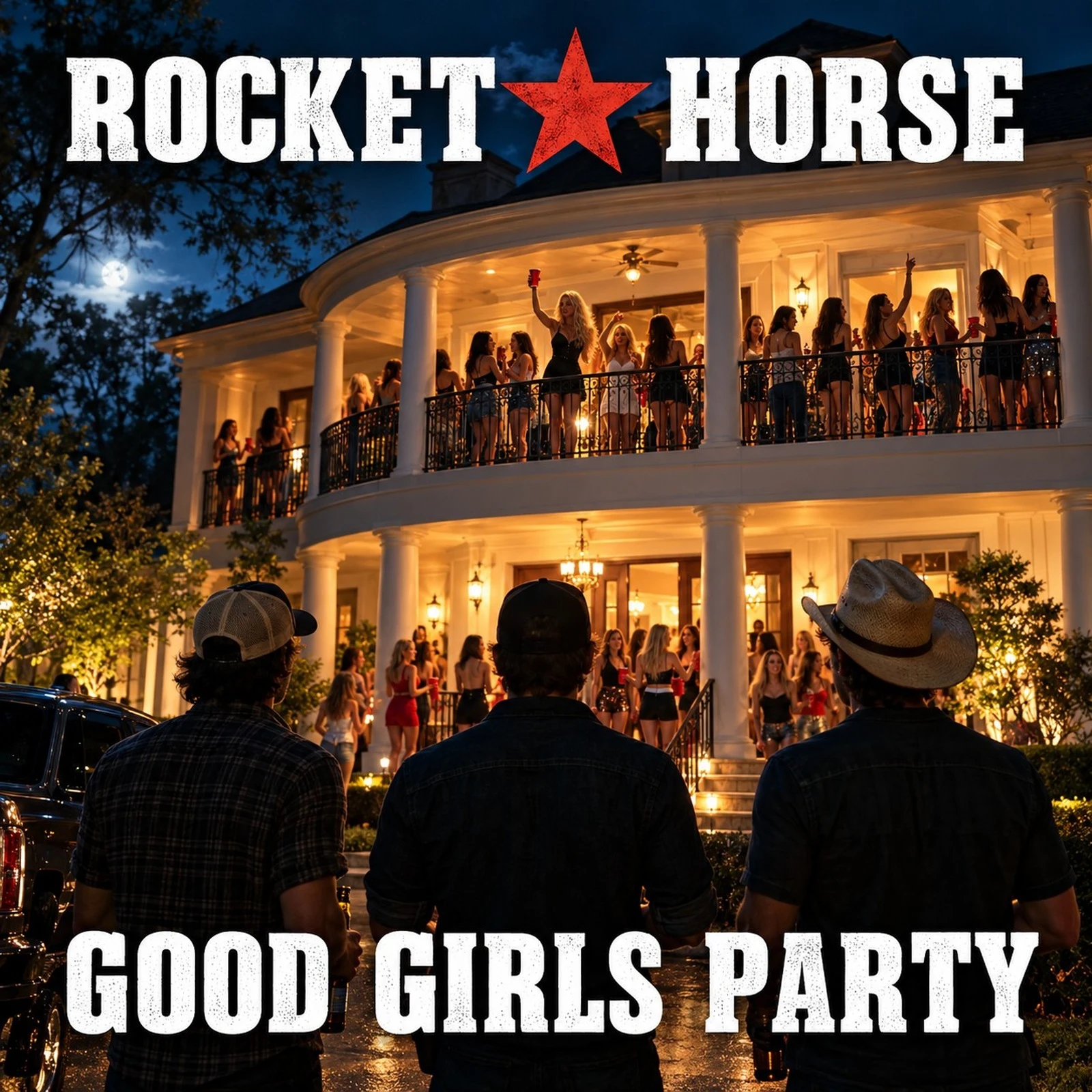
Incoming Open Stage 5-Song Lineup
- • “Rockstar” — AI-assisted modern rock
- • “Good Girls Party” — AI-assisted country-rock anthem
- • “Circus” — Funk-rock crossover groove
- • “Shotgun Wedding” — Narrative country-rock storytelling
- • “Maybe Me and the Moon” — Melodic midtempo ballad
Notable Traditional Studio Tracks
- • “Revolution” — Film placement in “How to Cook a Frog”
- • “Kryptonite” — Studio session with live players
The tools will continue to evolve, models will be updated, and production techniques will shift. But the human element remains where it has always been: in the life lived, the observation made, and the heart behind the pen.
Brian Myk was writing songs long before AI arrived, and he will be writing them long after the current technological debate settles. The technology didn't create the songwriter—it simply gave him the wings to set his catalog free.